AI · Life Sciences
Quality Management System for Life Sciences
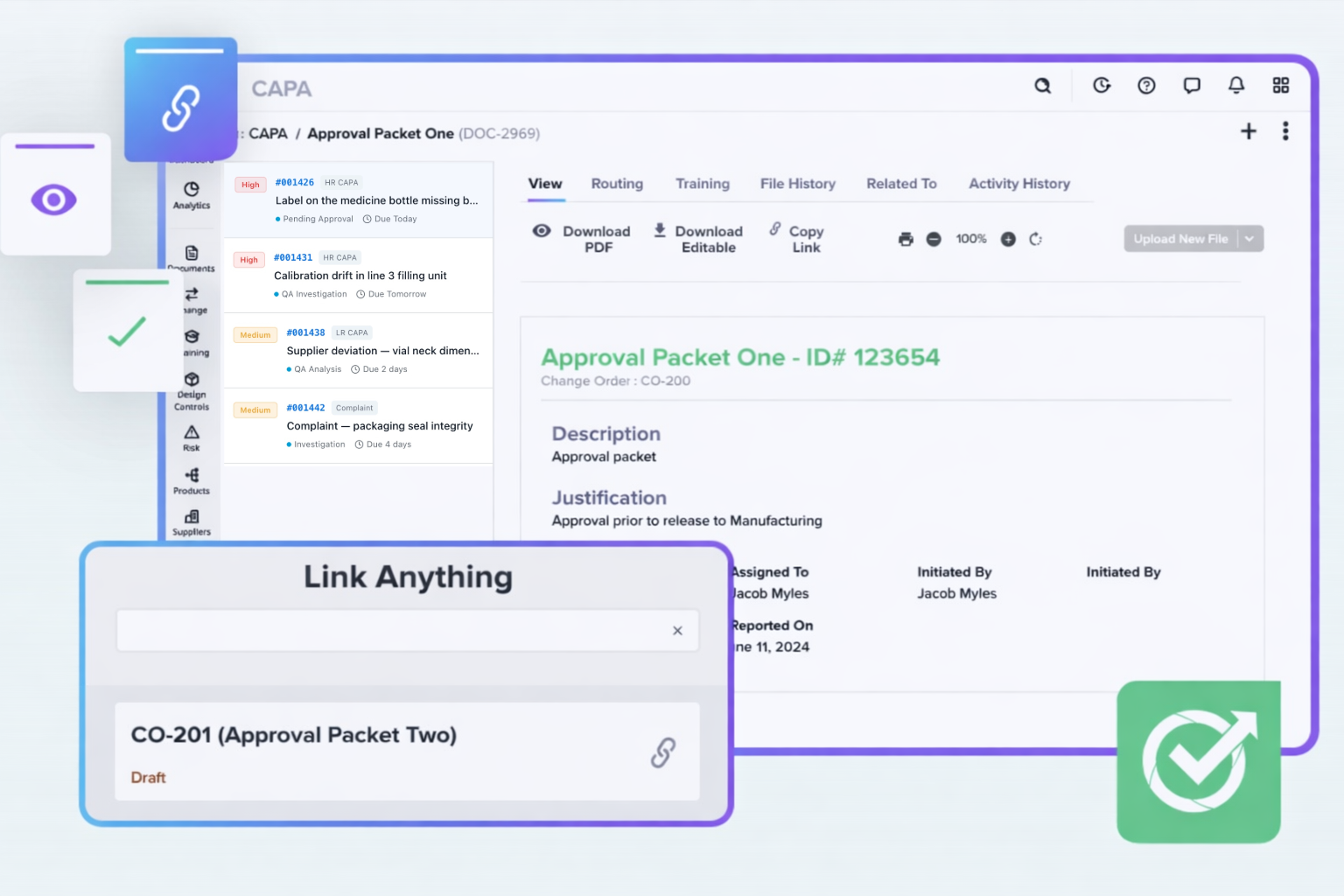
Pharma manufacturers operate under strict FDA and EU regulations that require timely reporting and closure of all quality events. Any lapse — whether a delay in reporting, incomplete documentation, or failure to drive a deviation or CAPA to closure — can trigger serious regulatory action. These actions range from warning letters and halted market releases to full license revocation or shutdown of manufacturing units, given the potential impact on patient safety.
- Role
- UX Lead
- Duration
- 10 months
- Company
- Compliance Group
- Domain
- Life Sciences · Pharma · Regulated SaaS
01
Problem Statement
Quality teams were struggling with fragmented, paperwork‑heavy workflows. Audit preparation, deviation tracking, and CAPA processes lived in disconnected systems, slowing coordination and limiting visibility across the quality lifecycle. This fragmentation created blind spots, delayed risk detection, and made it difficult to ensure timely reporting and closure of quality events — ultimately increasing compliance risk and extending time‑to‑market, sometimes pushing product bring‑up to nearly five years.
02
Business Objective
Create the most efficient path to quality excellence by transforming deviation, audit, and risk workflows into a proactive risk‑signal layer for FDA / EU MDR‑regulated manufacturers.
Embed AI into the QMS to support quality‑event trend forecasting and reduce manual reporting overhead.
03
Human‑Centric Design Process
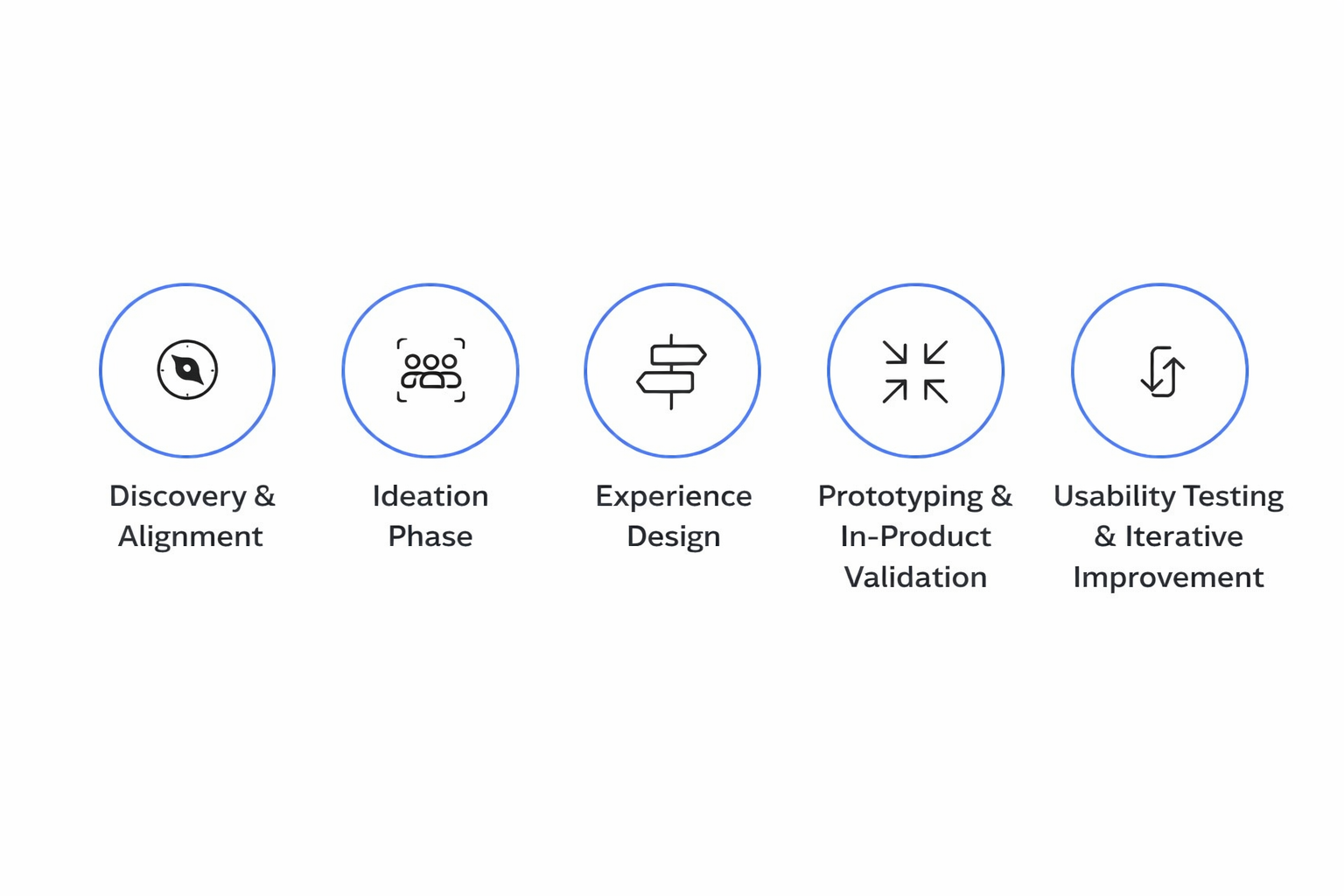
Discovery & Alignment
Research, market analysis, and stakeholder alignment to define the problem space, constraints, and success metrics.
18
User interviews
4
Stakeholder categories
5+
Field visits to manufacturing floors
1
Deep dive into QMS workflows
User Research
Mixed‑method research across manufacturing floors and back‑office environments. Tasks were prioritised using a weighted scoring model so engineering effort aligned with regulatory risk, not the loudest opinion.
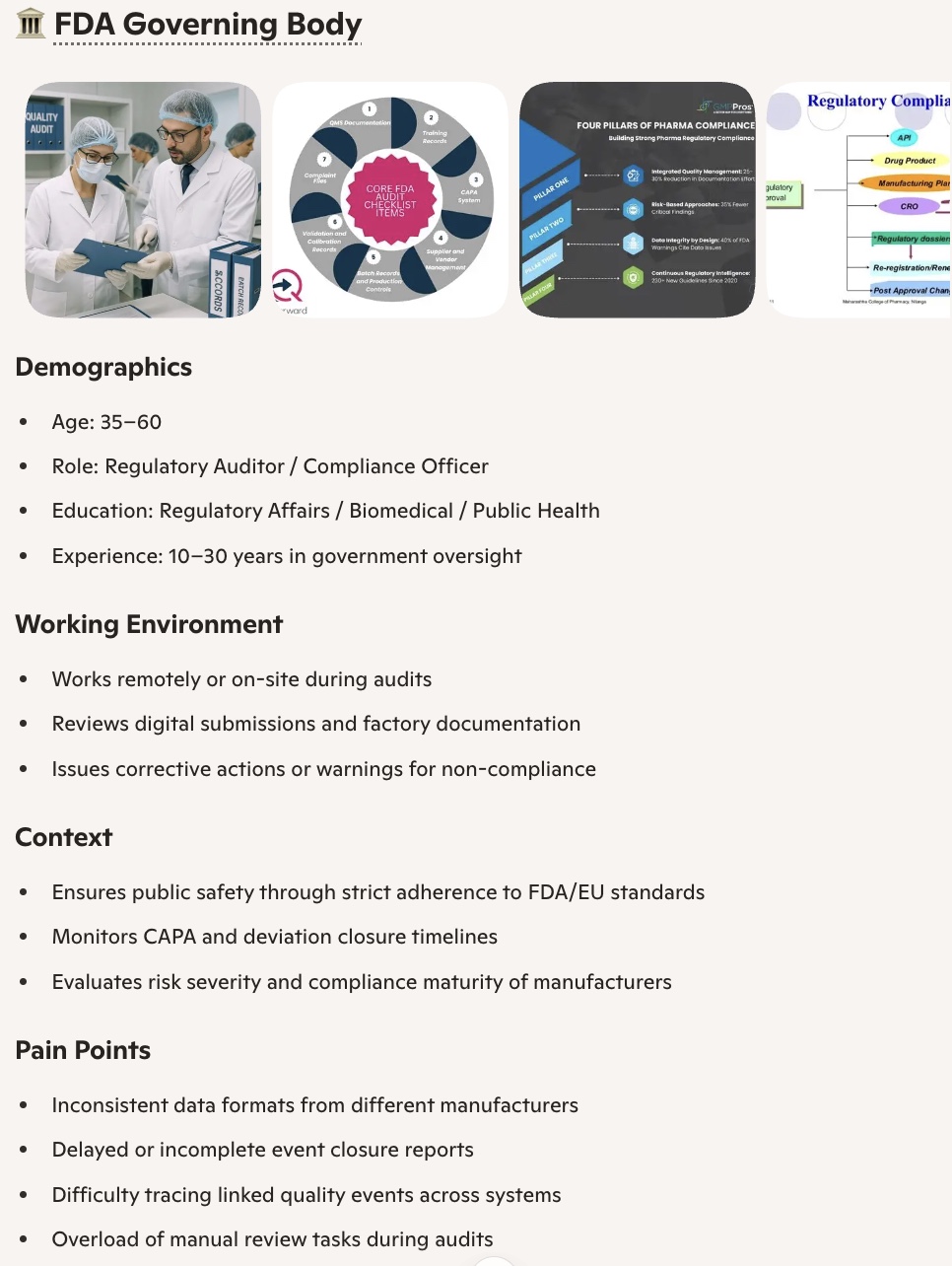
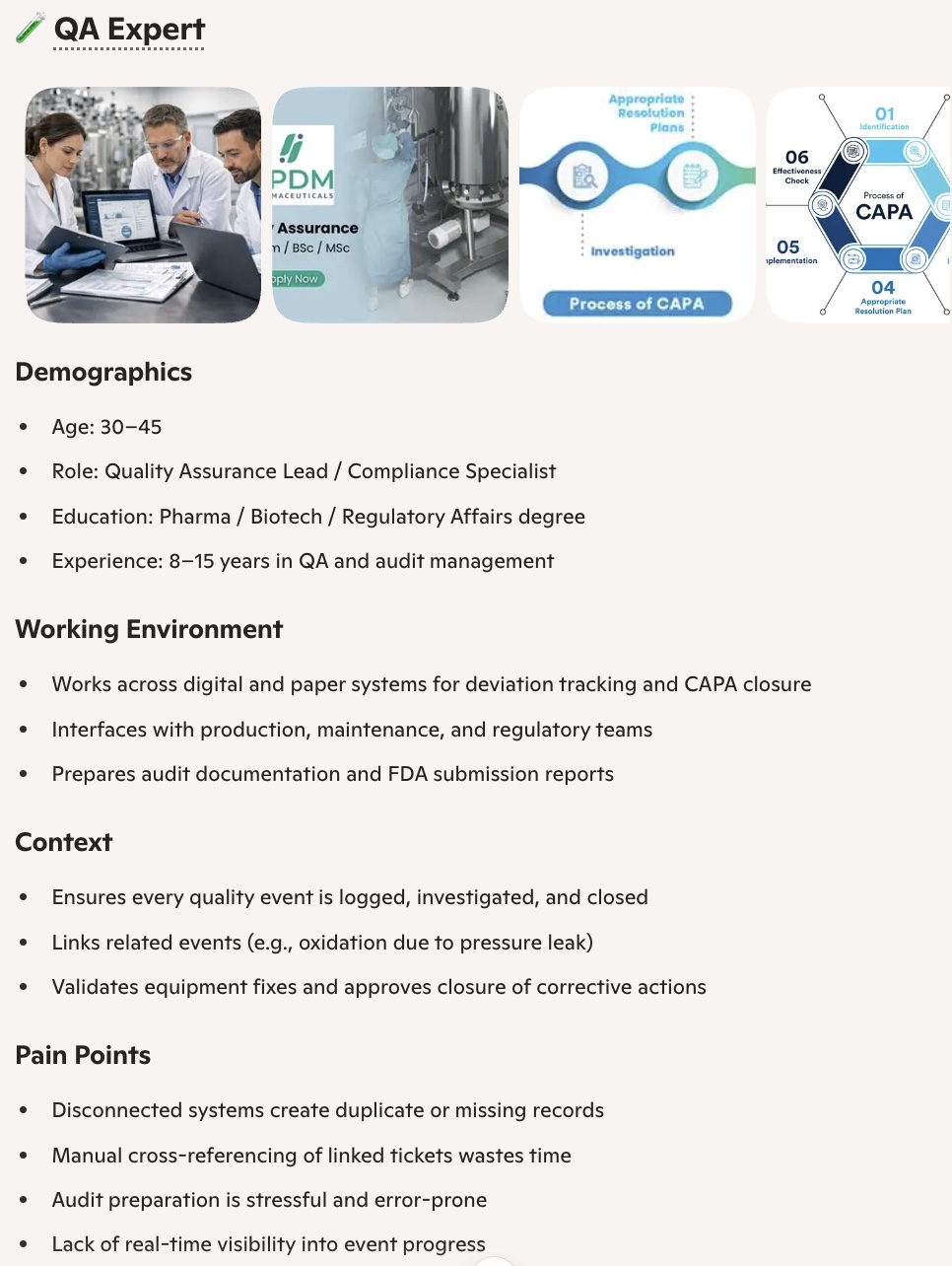
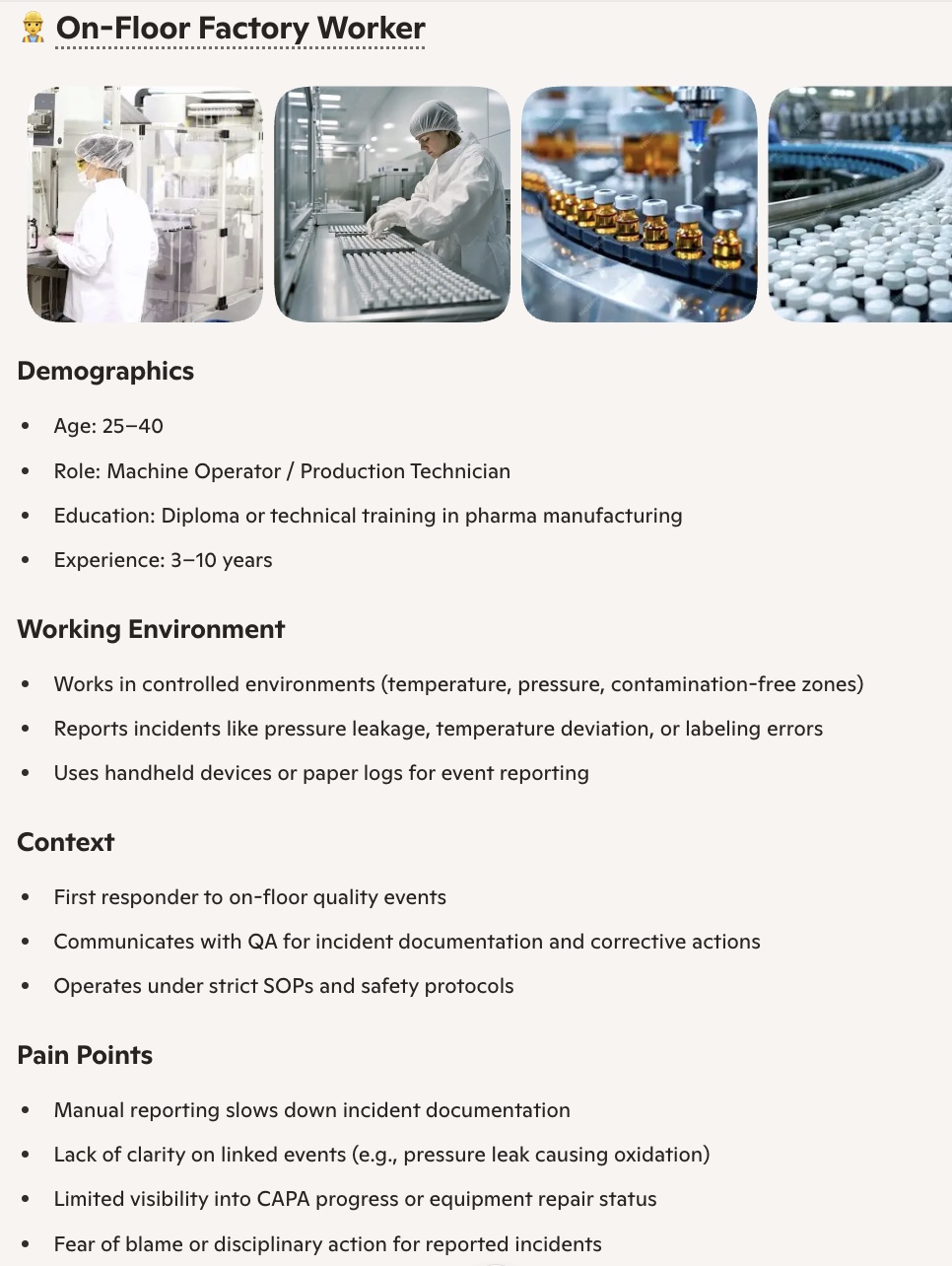
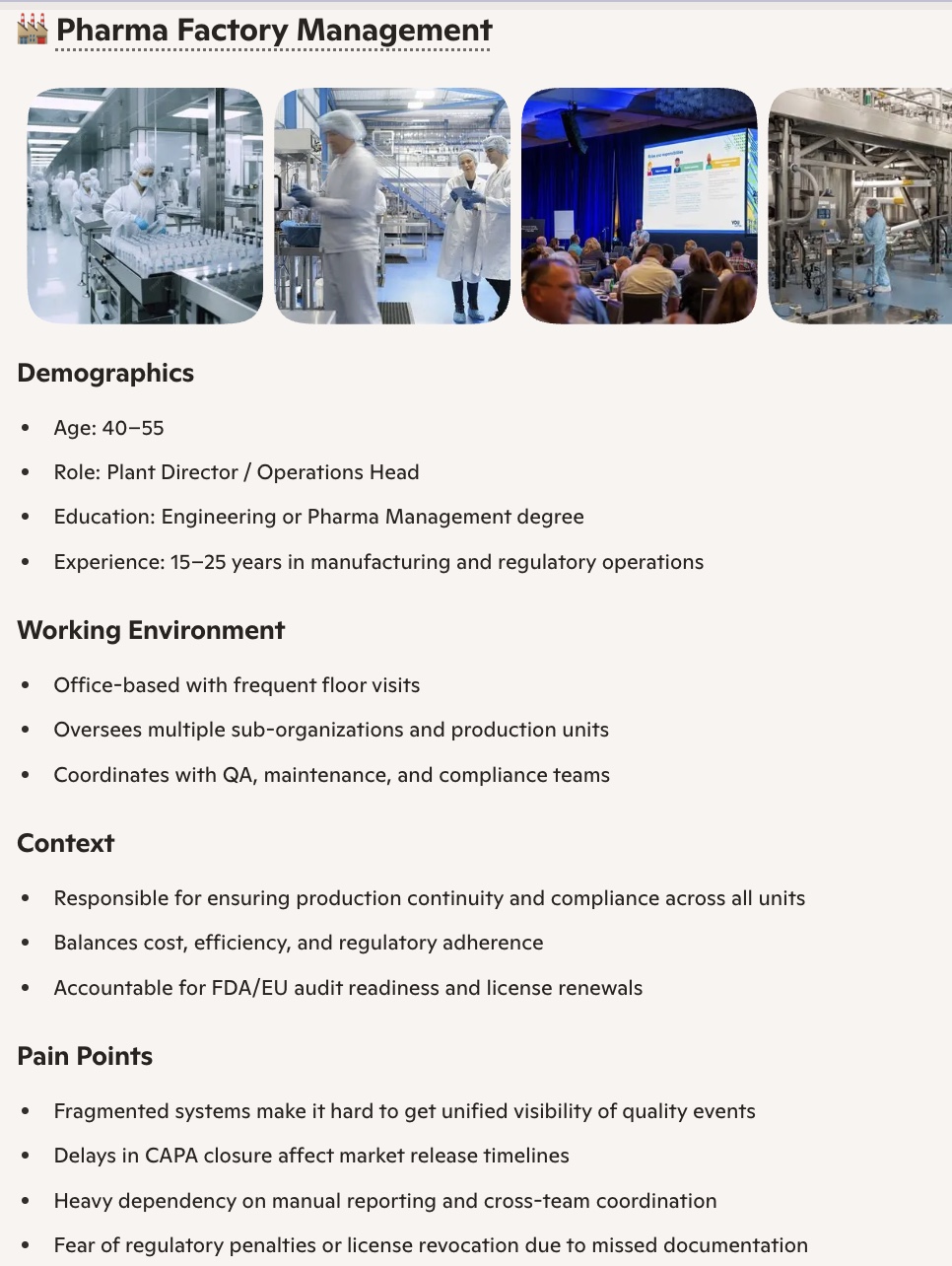
Consolidation of User Interview Findings
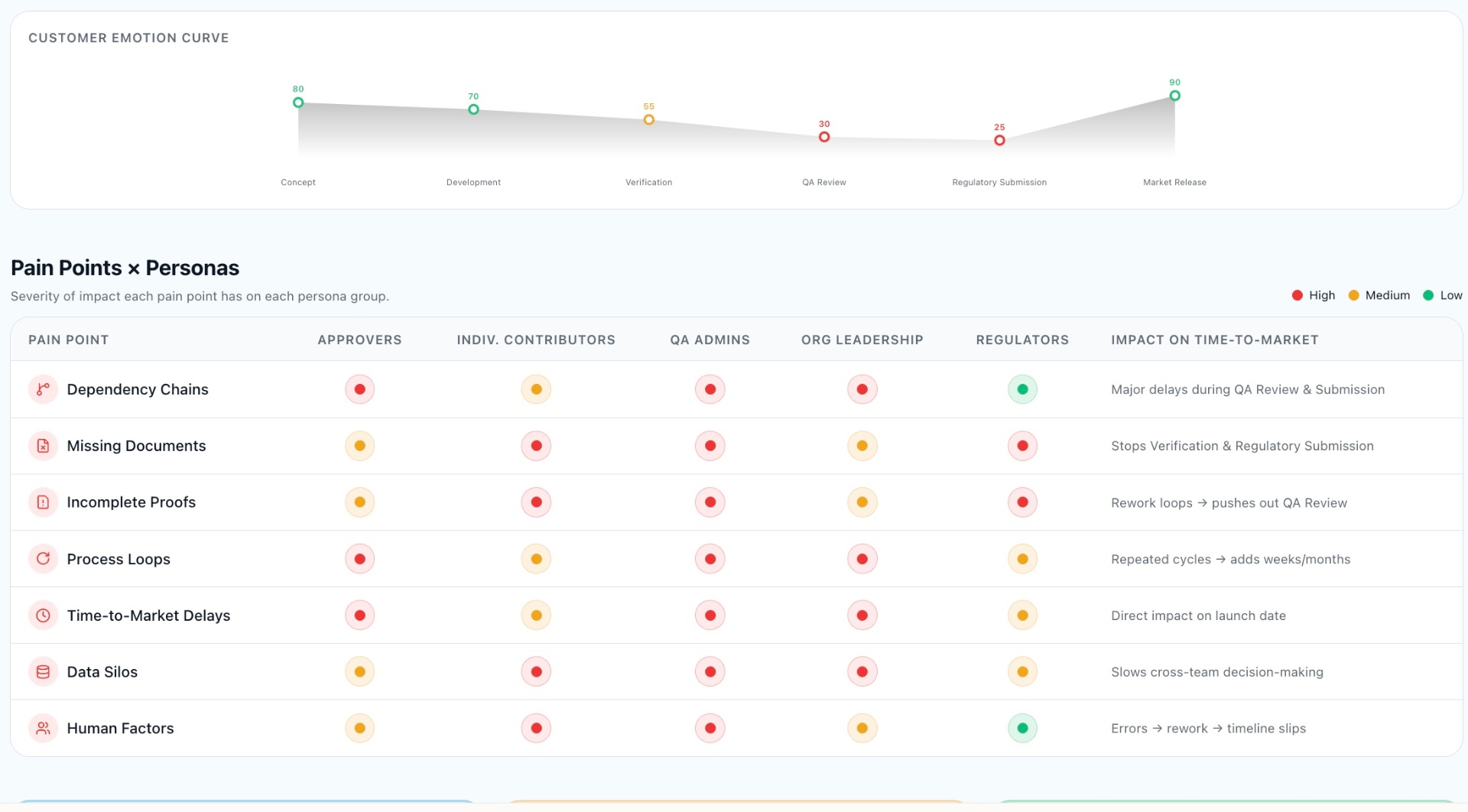
Mapped pain points across five persona groups to reveal where severity clustered and to anchor design priorities against the customer emotion curve from pharma manufacturing to market release.
User Personas
- Demographics
- Working environment
- Context
- Pain points
Customer Emotion Curve
Surfaced where time‑to‑market actually slips and where user frustration peaks.
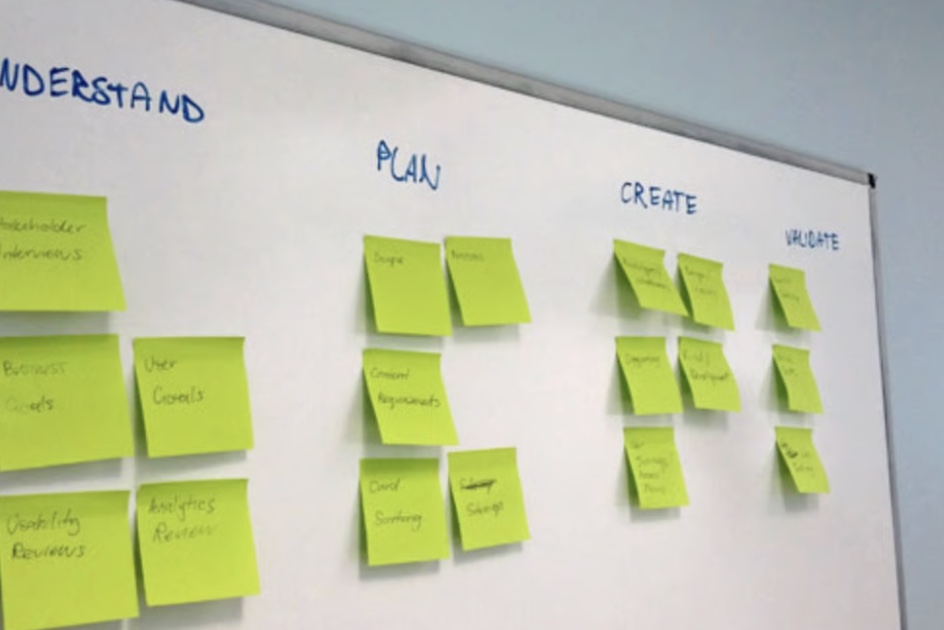
Ideation Phase
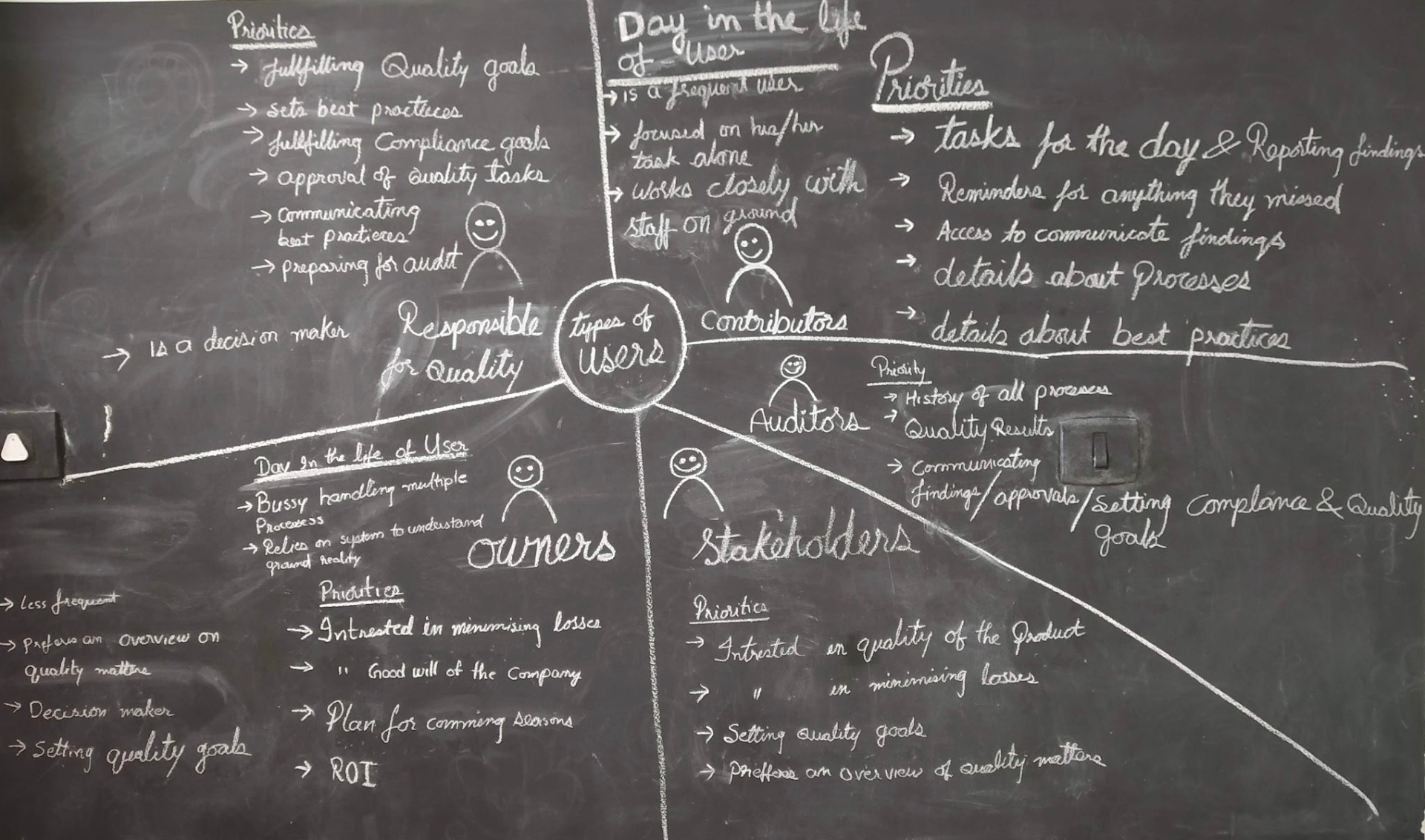
Conducted B2C and B2B ideation workshops with sample users, SMEs, and development teams to explore process deep‑dives.
Task prioritisation
Weighted scoring and grouping across five dimensions:
- Task frequency
- Severity
- Regulatory risk
- Cross‑team dependency
- Effort vs. impact
Workshop outputs
- Information architecture
- Task flows
- 01Divergence — free thinking
- 02Emergence — pattern recognition
- 03Convergence — decision‑making
Experience Design
Insights from Discovery and Ideation informed the next layer of design artefacts.
- User flows
- Wireframes
- Interaction patterns
Deliverables included low‑fidelity and high‑fidelity wireframes, shared through structured feedback loops with product, engineering, and domain experts to validate direction.
Prototyping & In‑Product Validation
Built core features, templates, and functional prototypes. Validated them inside the platform to assess feasibility, clarity, and workflow efficiency.
Every screen traced back to a regulated CAPA step
- 01Identify
- 02Evaluate
- 03Plan
- 04Investigate
- 05Develop
- 06Implement
- 07Measure
- 08Document
Usability Testing & Iterative Improvement
Heuristic Analysis
Designs were evaluated against focused heuristics to maintain consistency and clarity:
- Visual hierarchy — guiding attention to critical elements
- Consistency — adherence to the design system
- Navigational clues — helping users orient within workflows
- Heuristic checks — user control, error prevention, help/documentation
User Testing
Moderated, task‑based sessions with manual and screen recordings. Insights informed iterative refinement and feature expansion. Tracked parameters:
- Discoverability of CTAs
- Task completion time
- Interpretation of nomenclature
- Adaptability to new task flows
04
Project Summary
Client Feedback — From our FDA‑facing client: "You've hit the ball out of the park." They praised the risk‑prediction advantage achieved before their FDA compliance audit and the significant reduction in timelines, marking a standout success in proactive quality readiness.
Success Metrics — 40% overall efficiency increase. 45% reduction in test planning time. 60% reduction in summary reporting time.
Learnings — 1) In regulated domains, design must make risk visible early, not hide complexity. 2) AI is most effective when it reduces report‑writing time, not when it attempts to replace human judgment on non‑conformities.
05
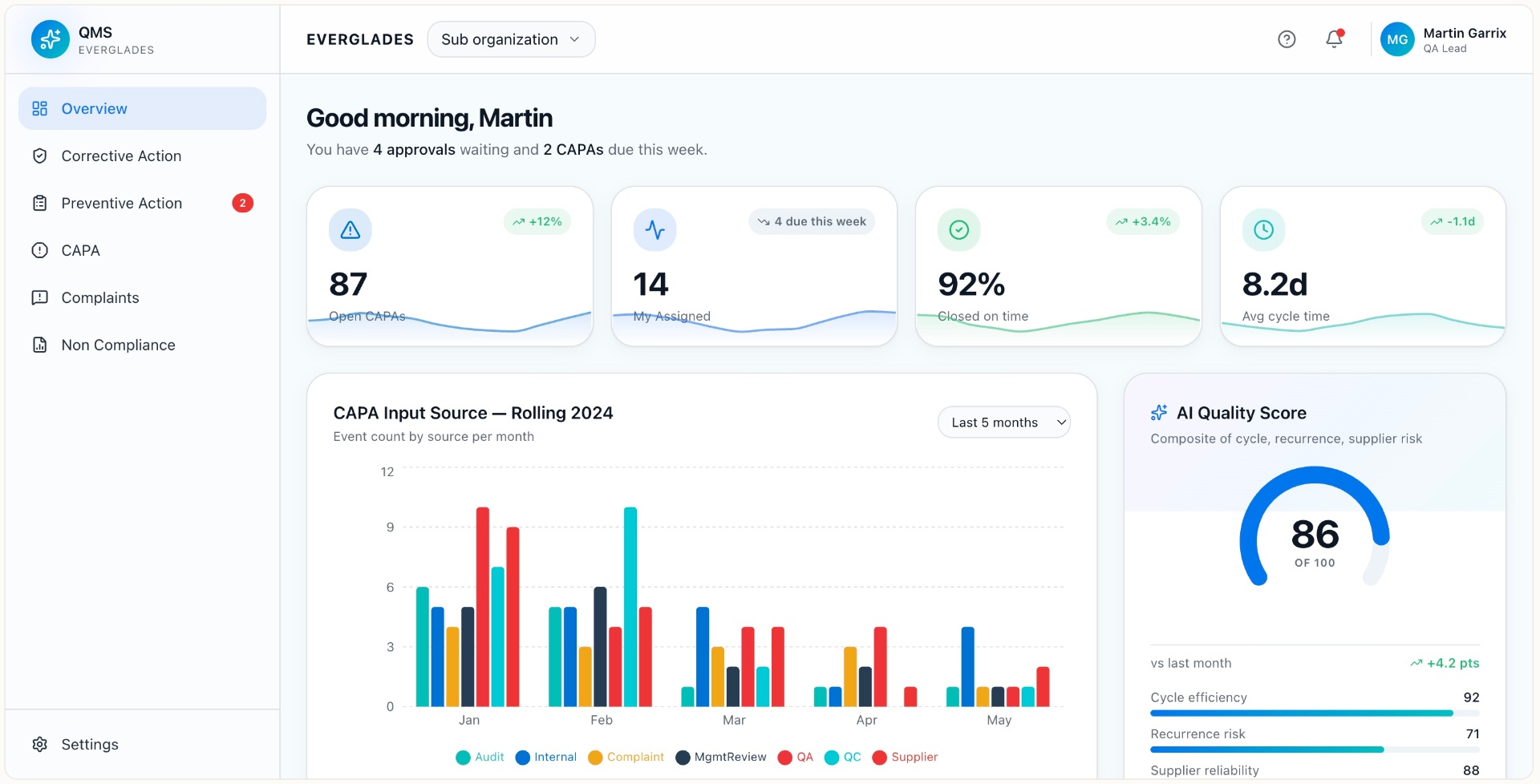
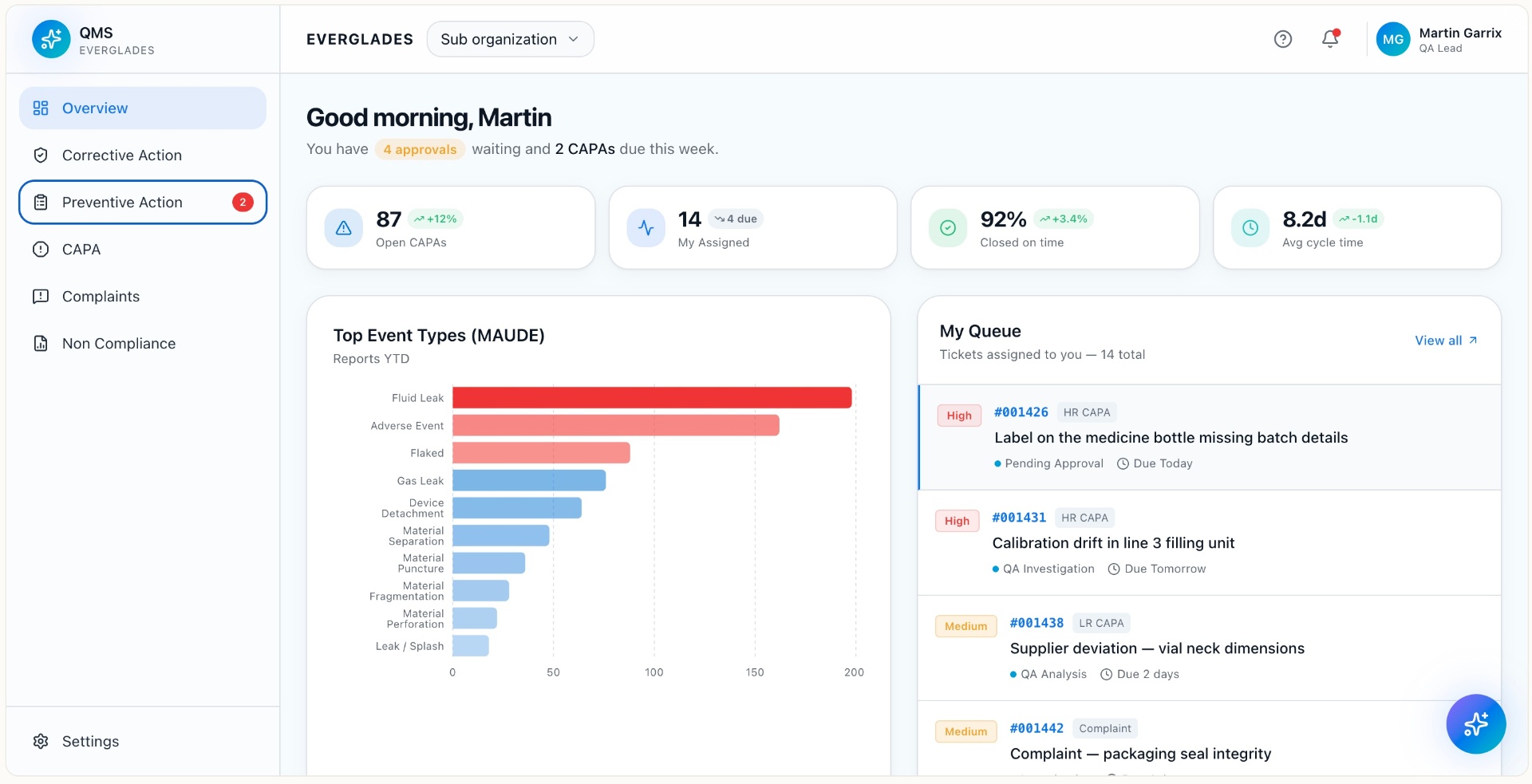
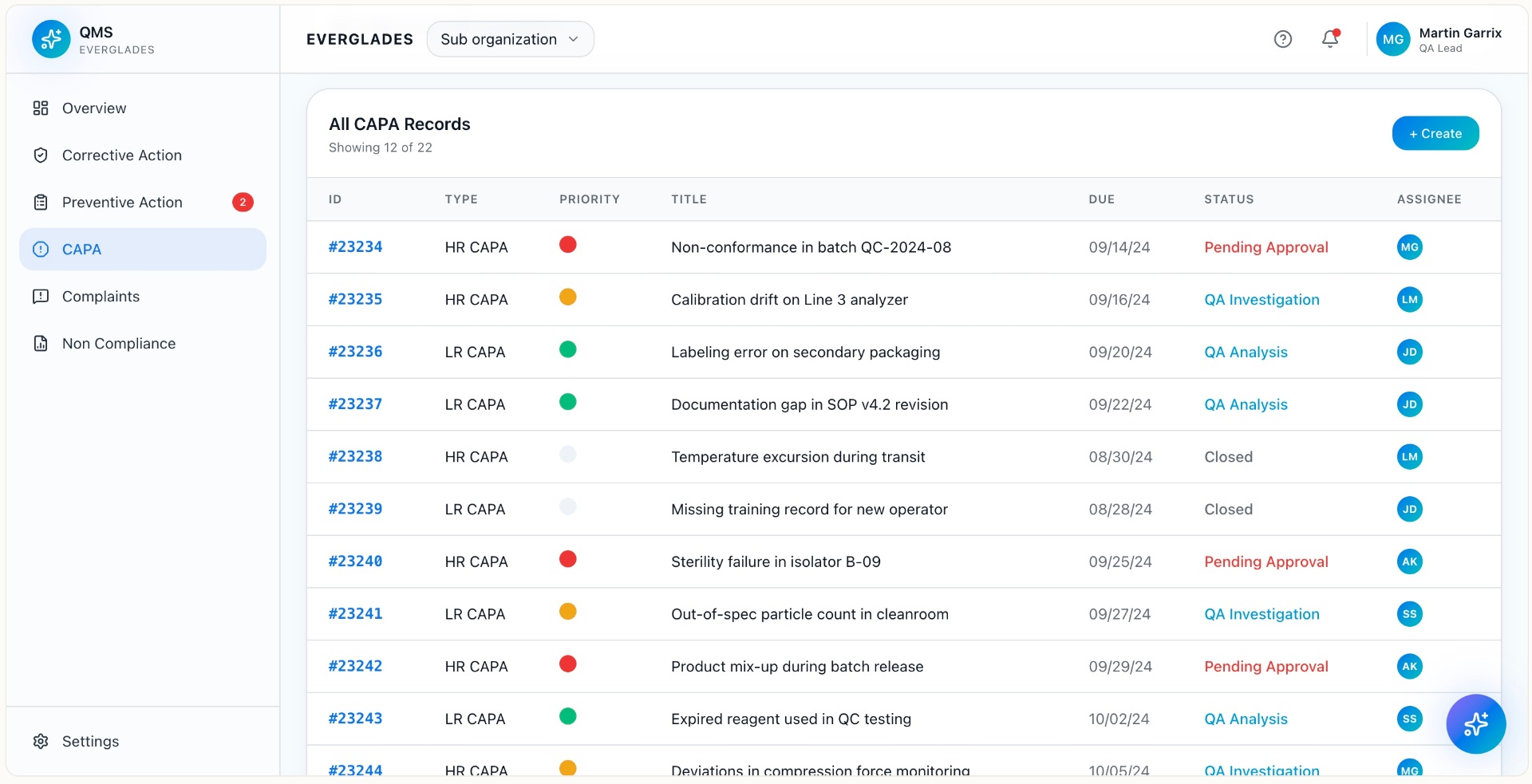
Core Functionalities Shipped
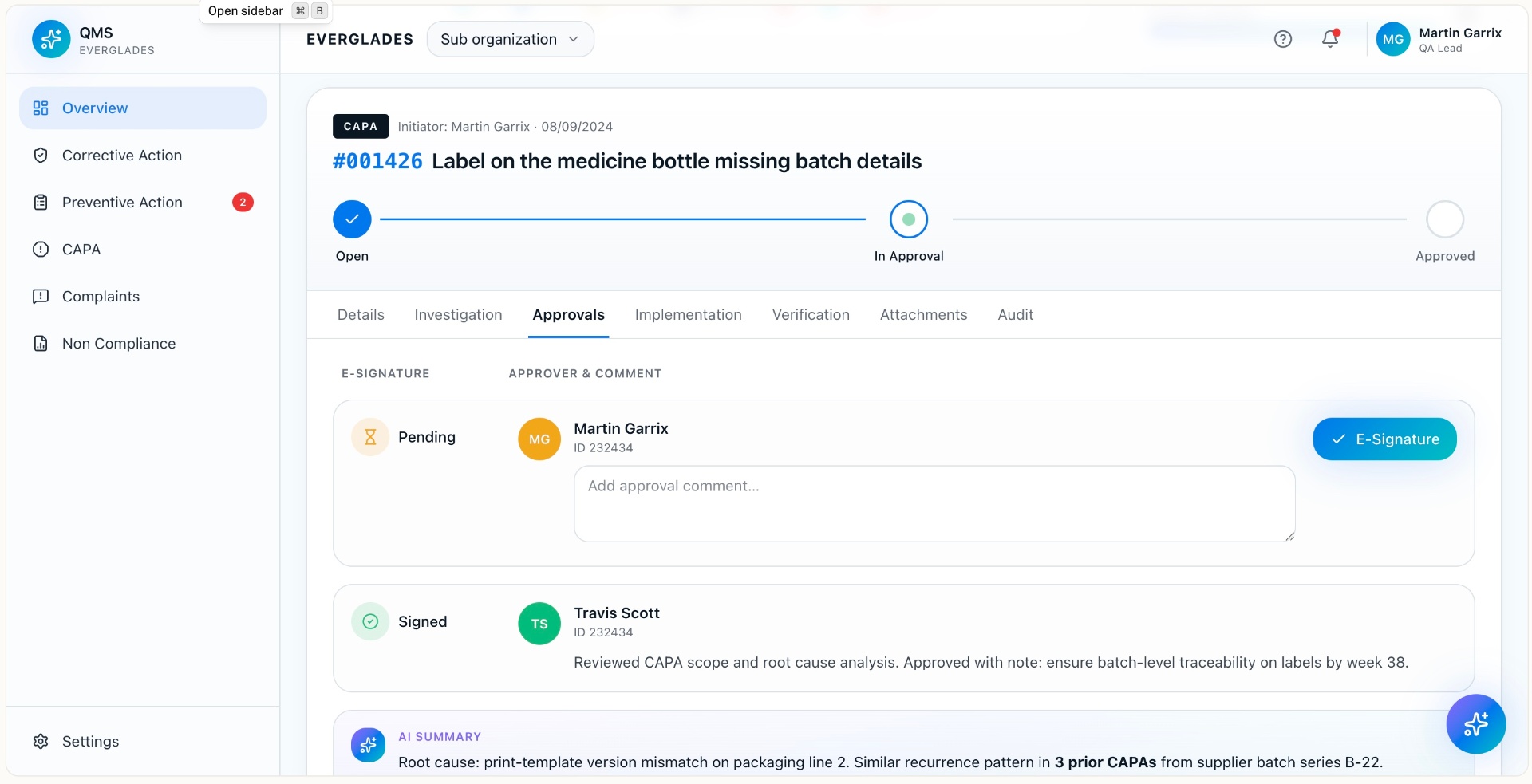
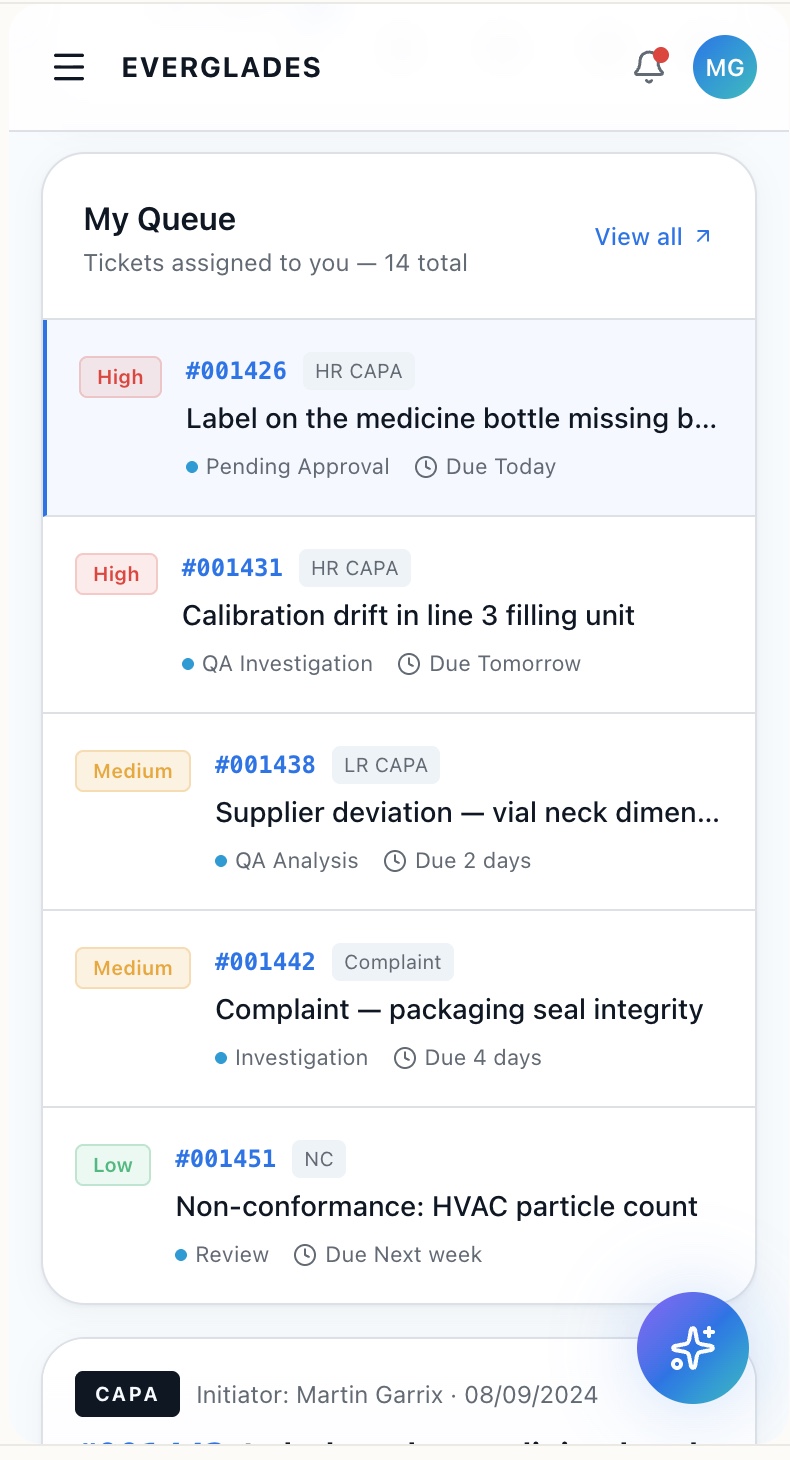
- Deviation tracking — identifies and documents process deviations, linked to corrective actions (CAR).
- Audit & compliance — internal audits, documentation control, validation protocols for FDA / EU MDR.
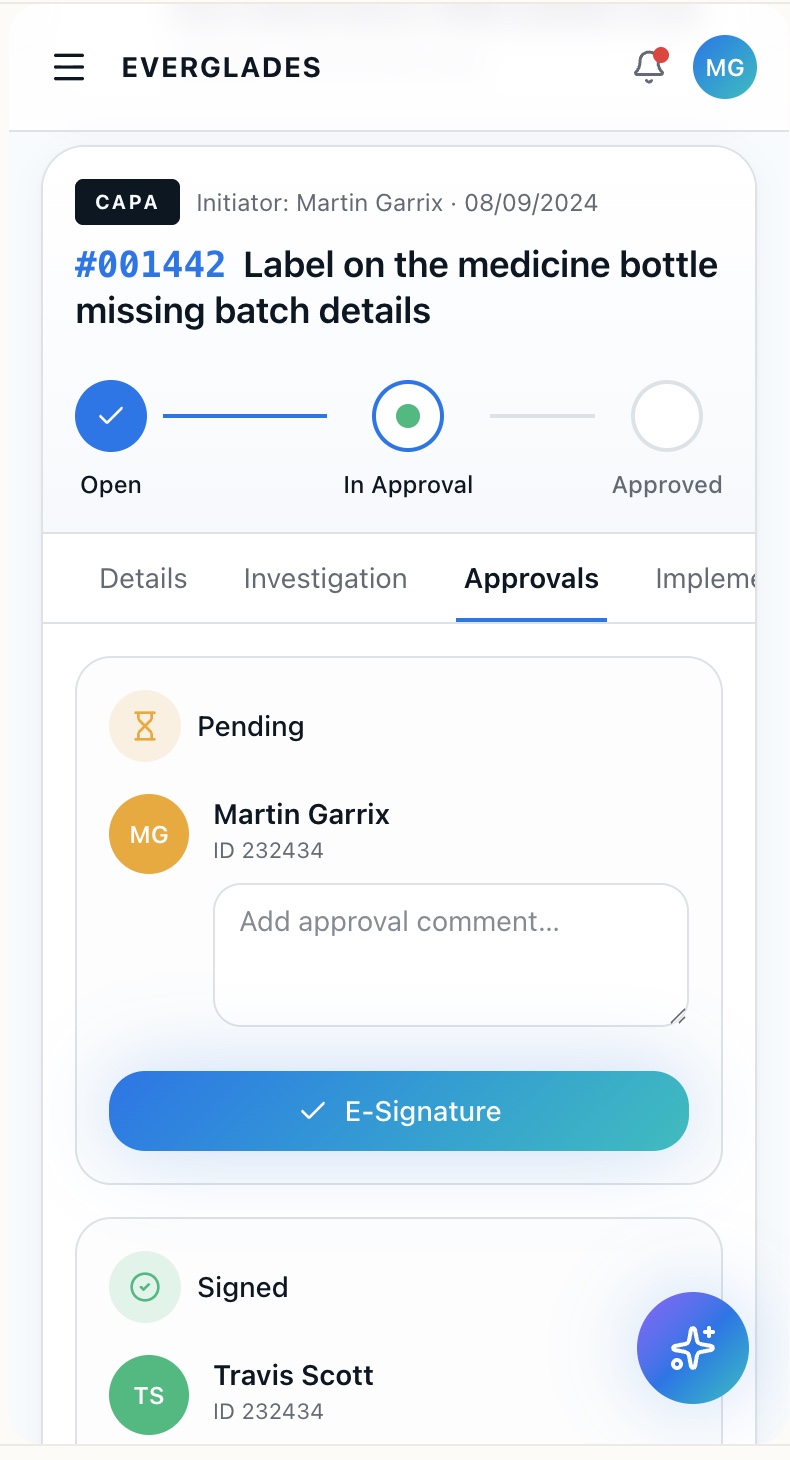
- Risk management — embedded risk assessment and CAPA management to address non‑conformities proactively.
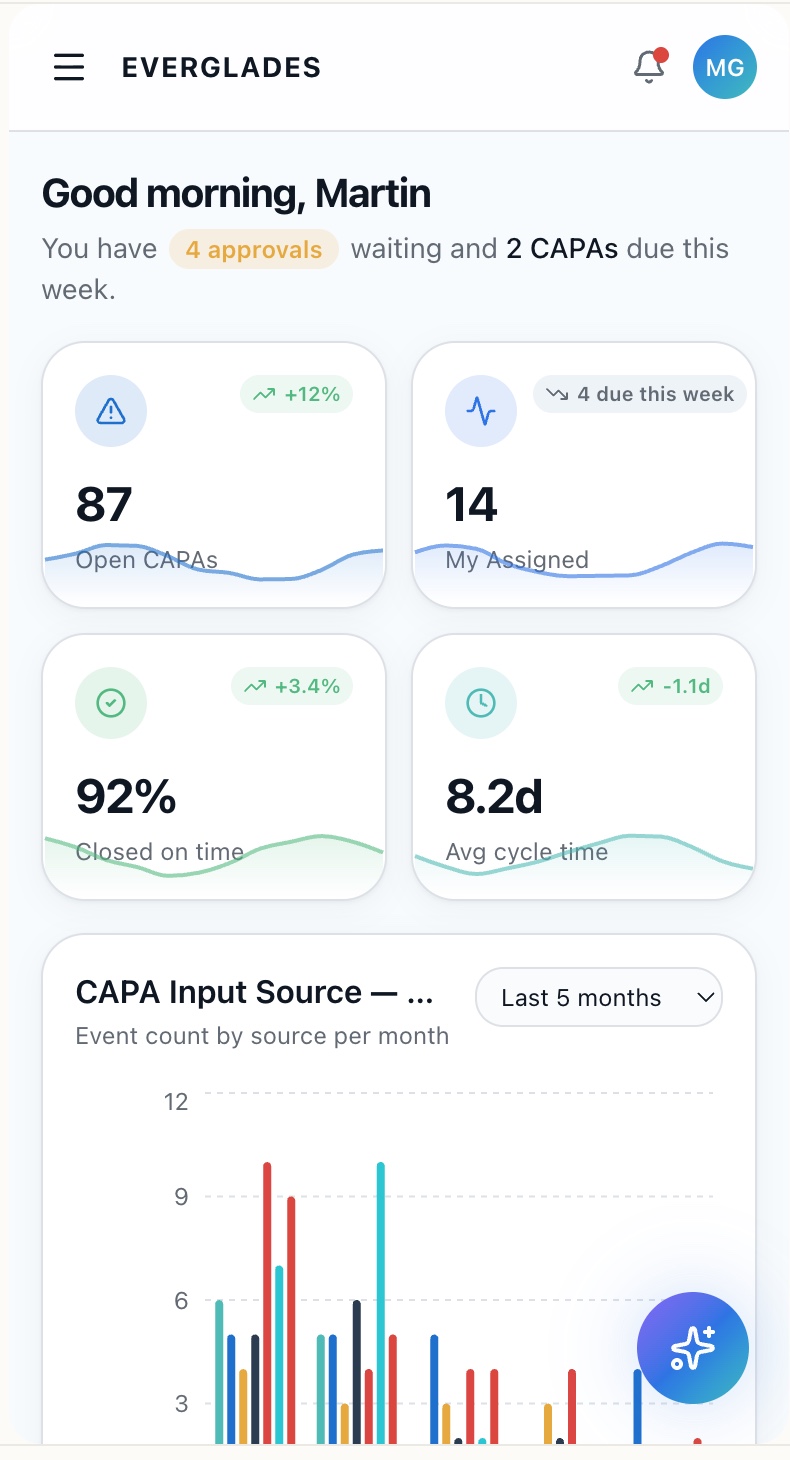
- AI‑assisted summarisation for audit reports and deviation‑summary dashboards.
Desktop
Mobile
Keep reading
Other case studies


Working on a similar problem?
I take on senior contract, fractional and select full-time engagements where the brief is unclear and the stakes are real.
anjani.vc@gmail.com